
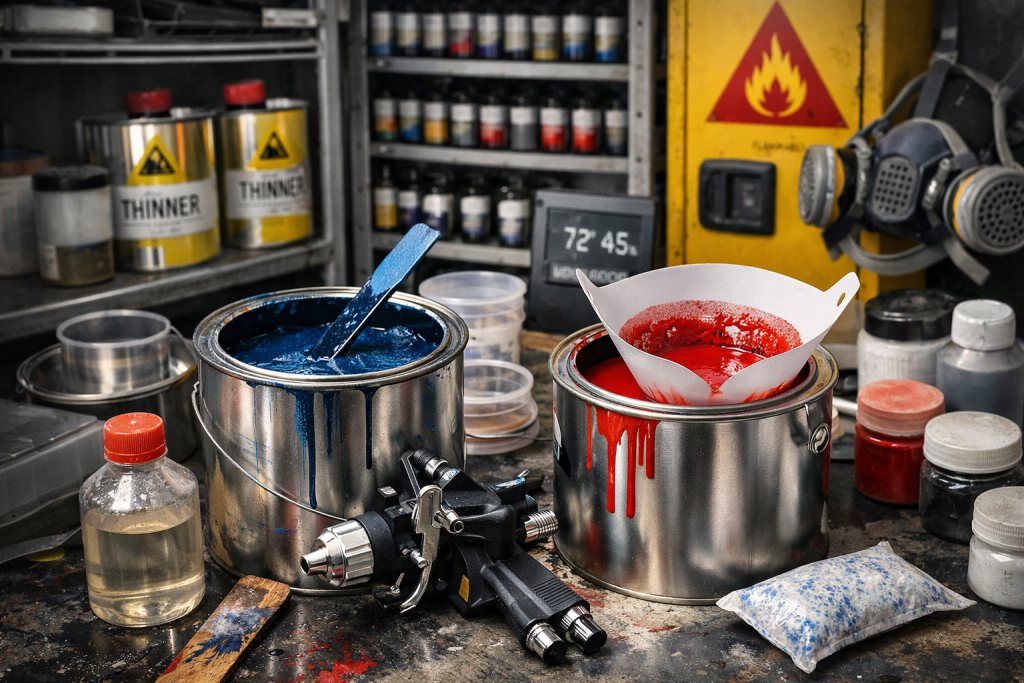

Understanding Automotive Basecoat Products
Automotive basecoats are formulated with pigments, binders, solvents, and additives that work together to create a smooth, vibrant color layer. Unlike single stage paints, basecoats require a clear coat on top for protection and gloss.
There are several types of basecoat systems available:
- Solvent based basecoats
- Waterborne basecoats
- Urethane based systems
Each type has specific storage requirements. Solvent based paints are sensitive to evaporation and temperature swings. Waterborne paints are sensitive to freezing and contamination. Urethane systems require careful sealing to prevent moisture exposure.
Understanding the chemistry behind your paint system helps ensure long term stability and consistent performance.
Ideal Storage Temperature for Basecoat Paint
Temperature control is one of the most important factors in maintaining automotive basecoat products.
Most manufacturers recommend storing basecoat paint between 60°F and 80°F. Extreme heat can cause:
- Solvent evaporation
- Increased internal pressure in containers
- Thickening or partial curing
Extreme cold can cause:
- Pigment separation
- Freezing in waterborne systems
- Reduced spray performance
If basecoat paint freezes, especially waterborne formulas, it may become permanently damaged. Always store paint in a climate controlled space away from direct sunlight.
Avoid storing paint in garages that experience wide temperature swings unless they are insulated and climate regulated.
Protecting Basecoat from Moisture and Humidity
Moisture is a major enemy of automotive coatings. Excess humidity can contaminate paint, especially urethane based systems that react with moisture in the air.
To minimize moisture exposure:
- Keep lids tightly sealed after every use
- Store containers upright
- Avoid opening cans in high humidity environments
- Use desiccant packs in storage cabinets if needed
Moisture contamination can cause bubbling, fisheyes, and adhesion problems during application. Maintaining a dry storage environment ensures consistent spray quality.
Proper Sealing and Container Management
Once opened, basecoat paint becomes more vulnerable to contamination and oxidation.
After each use:
- Wipe the rim of the can clean
- Seal the lid tightly
- Store upright
- Label with the date opened
If the original container becomes damaged, transfer the paint to a clean, airtight metal or approved plastic container. Avoid using containers that previously held other chemicals.
Never leave paint partially open or loosely covered. Even small amounts of air exposure can degrade the product over time.
Avoiding Contamination
Contamination can ruin an entire batch of basecoat paint. Dirt, dust, water droplets, and foreign chemicals all pose risks.
Best practices include:
- Use clean mixing sticks
- Filter paint before pouring into spray guns
- Keep storage shelves clean
- Avoid cross contamination between different paint systems
Straining paint before each use removes debris and ensures a smooth finish. Professionals often use paint strainers rated for automotive coatings to maintain quality control.
Shelf Life of Automotive Basecoat Paint
Automotive basecoat products typically have a shelf life of one to three years when stored properly. However, shelf life varies by manufacturer and formulation.
Signs that paint may have degraded include:
- Strong unusual odor
- Excessive thickening
- Clumping pigments
- Separation that does not remix smoothly
Always check manufacturer guidelines for expiration recommendations. Using expired paint can lead to color mismatch and poor adhesion.
When purchasing automotive base coat paint for sale, verify the production date if possible and buy from reputable suppliers to ensure freshness.
Proper Mixing and Agitation
Pigments in basecoat paint naturally settle over time. Before application, proper mixing is essential.
Use mechanical mixers or shake containers thoroughly to restore uniform consistency. Incomplete mixing can cause uneven color distribution and blotchy finishes.
If the paint has been stored for an extended period, allow it to reach room temperature before mixing. Cold paint is thicker and harder to blend properly.
For professional shops, investing in automated paint shakers improves consistency and reduces labor time.
Safe Storage of Thinners and Reducers
Basecoat systems often require thinners or reducers. These chemicals also require careful storage.
Store reducers:
- In tightly sealed containers
- Away from ignition sources
- In well ventilated areas
- At recommended temperatures
Never mix old reducers with fresh paint unless compatibility is confirmed. Using incorrect or contaminated reducers can alter drying time and finish quality.
Keep Safety Data Sheets accessible for all products stored in your facility.
Organizing Your Paint Storage Area
A well organized paint storage area improves safety and efficiency.
Consider these tips:
- Use labeled shelving
- Separate color families
- Rotate stock using first in, first out principles
- Keep flammable materials in approved cabinets
Flammable storage cabinets are especially important for solvent based products. Local fire codes may require specific storage standards for automotive paints.
Maintaining a clean and organized area reduces waste and helps technicians quickly identify needed materials.
Disposal of Old or Damaged Basecoat
Do not pour old paint down drains or throw it in regular trash. Automotive coatings contain chemicals that require proper disposal.
Contact local hazardous waste facilities for guidance. Many municipalities offer paint disposal programs.
If paint is slightly thickened but not expired, consult the manufacturer before attempting to restore it with reducers. Improper restoration can compromise quality.
Responsible disposal protects both the environment and your business reputation.
Maintaining Quality from Storage to Application
Storage is only one part of maintaining automotive basecoat products. Application environment also matters.
Before spraying:
- Ensure the spray booth is clean
- Control humidity levels
- Use proper filtration
- Maintain spray equipment
Using automotive base coat paint for sale can significantly enhance the final appearance and durability of your vehicle’s paint job. It’s crucial to choose high-quality materials and follow proper application techniques for the best results. Pairing premium materials with proper storage ensures consistent color matching, smooth finishes, and long lasting performance.
When basecoat paint is stored properly, technicians experience fewer defects, reduced material waste, and improved customer satisfaction.
Common Mistakes to Avoid
Even experienced technicians sometimes overlook storage basics. Avoid these common errors:
- Storing paint near heat sources
- Leaving lids loosely sealed
- Mixing incompatible brands
- Ignoring expiration dates
- Failing to strain paint before use
Correcting these habits can dramatically improve finish quality and reduce rework.
Why Proper Storage Protects Your Investment
Automotive basecoat products represent a significant financial investment. High quality coatings are engineered for precision and durability. Poor storage undermines that engineering.
When you purchase automotive base coat paint for sale, you are investing in performance, color accuracy, and long term protection. Proper storage preserves those qualities until the moment of application.
Whether you manage a full scale collision repair shop or work on personal vehicle projects, taking care of your materials ensures professional results every time.
Frequently Asked Questions
How long can automotive basecoat paint be stored?
Most basecoat paints last between one and three years when stored in a sealed container at recommended temperatures. Always consult manufacturer guidelines for specific shelf life details.
Can automotive basecoat paint go bad?
Yes. Paint can degrade due to heat, moisture, air exposure, or contamination. Signs include thickening, clumping, or strong unusual odor.
What happens if basecoat paint freezes?
Waterborne basecoats can become permanently damaged if frozen. Solvent based paints may also separate and lose performance quality.
Should basecoat paint be shaken before use?
Yes. Pigments settle over time, so thorough mixing or shaking is necessary before application to ensure consistent color.
How should leftover mixed basecoat be stored?
If already mixed with reducer, shelf life decreases significantly. Store in an airtight container and use as soon as possible according to manufacturer recommendations.